
Screed Flooring
Many flooring failures—loose tiles, hairline cracks, uneven surfaces, or premature damage—are not caused by the finish material itself, but by improper subfloor preparation. Structural concrete is not designed to receive flooring directly. Even when it looks smooth, it often lacks the stability and precision required for durable floor installation.
Screed is an engineered intermediate layer installed between structural concrete and the final floor finish. It ensures levelness, surface uniformity, and long-term stability to reduces or controls the transfer of minor shrinkage cracks and stresses. In simple terms, screed is the difference between durable flooring and costly future repairs.
This guide examines screed from both a technical and practical construction perspective. It explains what screed is, the main types used in flooring systems, standard thickness ranges, drying time expectations, installation costs, and the key practices that prevent cracking and floor settlement.
What Is Screed in Construction?
Screed is an engineered leveling layer placed on top of a structural concrete slab. Its primary purpose is to prepare the floor surface so it can properly receive the final floor covering.
Screed is a thin, cement-based layer applied over structural concrete to create a smooth, level, and stable surface before installing floor finishes such as tile, stone, wood, or vinyl. It improves flatness, distributes loads evenly, and reduces crack transfer—making it essential for durable, long-lasting flooring systems.
Main Components of Screed:
- Cement (Specified Strength Grade)
- Graded Sand (Controlled Particle Distribution)
- Precisely Measured Water
- Performance-Enhancing Additives (When Required)
What distinguishes screed from ordinary mortar is precise mix control and engineered workability. A high-quality screed is neither too dry—making placement difficult—nor too fluid—causing shrinkage cracks and strength loss. Its balanced consistency ensures proper compaction, durability, and long-term flooring performance.
What Makes Screed Different from Regular Mortar?
At first glance, screed may appear similar to standard cement mortar. However, the key difference lies in mix proportion control, consistency, and execution behavior.
Screed is engineered to meet specific performance criteria such as flatness tolerance, compressive strength, shrinkage control, and load distribution—while regular mortar is typically used for bonding masonry units.
Types of Screed and Their Key Differences
If your goal is to achieve a smooth, durable, and low-maintenance floor in the long term, choosing the right type of screed can eliminate many future problems. Each screed system is engineered for specific site conditions and performance requirements. Understanding the differences between them allows you to make a smarter, more cost-effective flooring decision.
In this section, we review the most common types of screed, along with their applications, key advantages, and practical limitations—so you can select the most suitable option for your flooring project with confidence.
Traditional Screed (Sand-Cement Screed)
Traditional screed—also known as sand-cement screed—is the most commonly used floor leveling system in residential and small commercial construction. It is made from a controlled mix of cement, graded sand, and water, applied manually to create a smooth, stable base for floor finishes.
However, the performance of traditional sand-cement screed depends heavily on the installer’s skill and strict control of the water-to-cement ratio. Adding excess water to improve workability is one of the primary causes of shrinkage cracking, reduced compressive strength, and long-term durability issues in this type of screed.
Suitable Applications for Traditional (Sand-Cement) Screed
- Standard residential buildings
- Areas with lower sensitivity to precise floor level tolerances
- Projects with budget constraints where cost-efficiency is a priority
Self-Leveling Screed (Flowing Screed)
Self-leveling screed is a high-flow, pump-applied screed designed to automatically spread and level across the substrate with minimal manual intervention. It delivers superior flatness accuracy and faster installation compared to traditional sand-cement screed.
This type of screed is commonly formulated with cement or calcium sulfate binders and performance-enhancing additives to improve flowability, strength, and shrinkage control.
Typical Applications:
- Commercial and office buildings
- Large surface areas requiring high flatness tolerance
- Floors with underfloor heating systems
- Industrial or high-precision flooring systems
Polymer-Modified Screed (Polymer Screed)
In polymer-modified screed, specialized polymers are added to enhance bonding strength, flexibility, and abrasion resistance. Compared to traditional sand-cement mortar, polymer screed delivers superior technical performance, with improved crack resistance and greater durability under mechanical stress and surface wear.
Polymer screed is ideal when durability, adhesion, and reduced thickness are critical design requirements. It is particularly effective in refurbishment projects and areas exposed to higher mechanical stress.
Where Polymer Screed Is Used
- Renovation and refurbishment projects
- Thin screed applications
- High-traffic commercial areas
- Industrial flooring systems
Areas requiring strong adhesion to concrete substrates
Underfloor heating screed is specifically engineered to encapsulate and protect heating pipes within radiant floor systems. This type of screed incorporates reinforcing fibers and thermal stress-control additives to accommodate temperature fluctuations, preventing cracking and preserving long-term floor performance and heat distribution efficiency.
In addition to protecting the heating pipes, this screed plays a critical role in evenly distributing heat across the floor surface, improving thermal conductivity and increasing the overall efficiency of the underfloor heating system.
Key features of underfloor heating screed:
- High thermal conductivity for efficient and uniform heat transfer
- Enhanced crack resistance against thermal expansion and contraction
- Extending the lifespan of the heating system
- Optimized flexibility to accommodate temperature fluctuations

Advantages of screed flooring systems
Screed flooring is not merely a surface-leveling layer—it is an engineered foundation that ensures durability, precise leveling, and the overall performance of the entire floor system. When executed correctly, many common flooring issues simply do not occur.
Below, we examine the most important advantages of screed installation from both a technical and practical construction perspective.
- High mechanical strength
Thanks to its precisely engineered mix of cement, graded aggregates, and a controlled water-to-cement ratio, screed achieves high compressive strength, ensuring reliable load-bearing performance and long-term structural stability for flooring systems.
This property allows the floor to withstand continuous loads, impact forces, and heavy foot traffic without experiencing settlement, cracking, or structural degradation.
In commercial and industrial projects where point loads and high traffic are common, a properly specified screed is not optional—it is a structural requirement to ensure durability, load resistance, and long-term floor performance.
- Precise surface preparation for optimal leveling and flooring performance
No floor covering (whether ceramic tile, natural stone, parquet, or epoxy) can maintain long-term durability when installed over an uneven or unstable surface.
Screed creates a perfectly level, uniform, and stable surface that allows final floor installation to be completed without structural stress. The result is reduced tile loosening, elimination of hollow sounds, minimized joint cracking, and prevention of premature floor failure.
- Thin-section screed application for efficient floor leveling and structural performance
In many construction projects, there are structural limitations related to floor height buildup or load-bearing capacity.
Screed allows the creation of a durable and perfectly level surface even at reduced thicknesses—making it especially suitable for renovation projects and residential apartment units where height constraints are critical.
This advantage eliminates the need for extensive demolition or adding unnecessary dead load to the building structure, making screed an efficient solution in weight- and height-sensitive projects.
- Long-term durability and structural stability
A properly installed screed maintains its structural integrity and performance for years without deterioration or loss of quality.
Unlike poorly prepared subfloors, a properly executed screed system minimizes the need for repeated repairs and prevents premature floor replacement, ensuring long-term flooring durability.
From an economic perspective, a properly executed screed system is one of the lowest-risk investments in floor construction, reducing long-term maintenance costs and minimizing the likelihood of expensive structural or flooring repairs.
- Compatibility with a wide range of floor coverings
Whether you plan to install ceramic tile, natural stone, parquet, laminate, or industrial floor coatings, screed provides a stable and properly leveled substrate suitable for all these flooring systems.
This versatility eliminates design constraints, allowing you to select the final floor covering based solely on functional requirements and aesthetic preferences—without being limited by substrate performance concerns.
- Optimal performance in underfloor heating systems
In underfloor heating systems, uniform heat distribution is critical. Screed fully encapsulates the heating pipes and ensures even thermal transfer across the floor surface, improving system efficiency while preventing heat concentration and thermal cracking
By fully encapsulating the heating pipes and distributing heat evenly across the surface, screed improves system efficiency while preventing heat concentration and thermal cracking.
For this reason, screed is considered the standard solution in professional underfloor heating installations.
Where Is Screed Used in Construction?
- Residential Buildings
Creates a smooth, stable, and noise-free substrate suitable for sensitive floor coverings such as parquet and laminate.
- Commercial Buildings
Withstands high foot traffic, heavy furnishings, and continuous use without compromising structural performance or surface integrity.
- Industrial Facilities
Provides resistance against heavy loads, machinery, and mechanical stress, ensuring long-term durability under demanding conditions.
- Underfloor Heating Projects
Optimizes heat distribution, enhances thermal efficiency, and extends the lifespan of radiant heating systems.
Why Is Screed Used in Construction Projects?
Using screed is not a decorative or optional choice—it is a technical requirement for floor quality control. Even when a concrete slab is carefully executed, it still contains construction tolerances, shrinkage effects, and surface stresses that are not suitable for modern floor coverings.
Corrects surface irregularities and level deviations in the concrete slab
- Prevents crack transfer from structural concrete to the final floor finish
- Enhances durability and extends the lifespan of the finished floor
- Prepares a stable substrate for sensitive floor coverings
- Creates a uniform base for underfloor heating systems
- Creates a uniform and stable substrate for underfloor heating systems, ensuring consistent heat distribution and long-term performance.
In projects where screed is omitted or improperly installed, repair costs often exceed the expense of correct screed execution by several times, making proper installation a critical long-term investment.
Is Screed Suitable for Floor Construction?
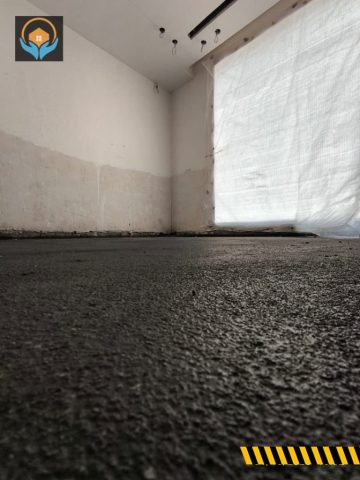
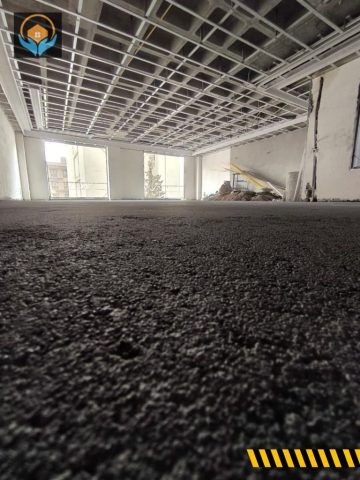
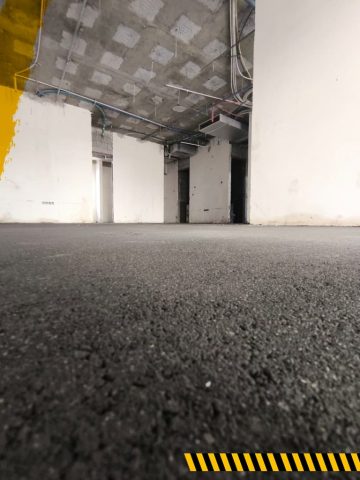
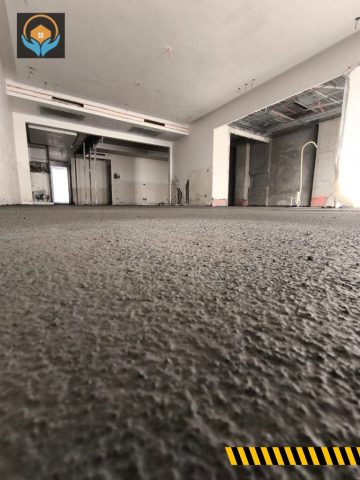
Yes. Screed is the essential first step in achieving high-quality floor construction—but it is not the final floor finish.
As an engineered intermediary layer, screed provides the stability, precise leveling, and structural integrity required for the successful installation of the final floor covering. This ensures that residential, commercial, or office flooring systems perform reliably without premature failure, cracking, or surface defects.
- In projects where high precision and strict leveling tolerances are required.
- In areas where sensitive floor coverings are to be installed.
- In underfloor heating systems.
- To prevent surface cracking and structural failure.
What problems does screed solve in flooring construction?
From an execution standpoint, screed manages four primary flooring challenges:
- 1)Surface unevenness of concrete
Concrete is inherently not smooth enough for final floor finishes. - 2) Stress and Crack Transfer
Screed acts as a buffering layer, reducing the transfer of structural stresses and micro-cracks from the concrete slab to the final floor covering. - 3) Inconsistent Floor Thickness
Without screed, controlling floor buildup thickness is extremely difficult. Screed allows accurate thickness regulation and leveling control. - 4) Reduced Lifespan of Final Flooring
A poorly prepared substrate significantly shortens the service life of any floor covering. Screed provides a stable, engineered base that enhances durability and long-term performance.
How Is a Screed Mix Design Determined?
Screed quality depends primarily on accurate mix proportions. One of the most common on-site mistakes is adding excess water to improve workability—a decision that often leads to shrinkage cracking, reduced compressive strength, and material segregation.
Key Parameters in Screed Mix Design:
- Cement-to-sand ratio (typically 1:3 to 1:4, depending on application)
- Properly graded, clean sand
- Controlled water content with a precise water-to-cement ratio
- Anti-crack fibers or plasticizing additives when required
A well-designed screed mix must provide consistent spreadability, proper compaction, and uniform setting behavior

Professional Steps for Proper Screed Floor Installation
Correct screed execution is the backbone of a durable, trouble-free flooring system. Any mistake in this process can directly lead to cracking, settlement, improper drainage, or premature failure of the final floor covering.
For this reason, professional screed installation is not a simple masonry task—it is a fully technical and engineered operation.
- 1. Professional Substrate Preparation
The first and most critical step is precise substrate preparation. The base must be structurally sound, dry, and completely free from dust, grease, curing oils, loose particles, or contaminants.
Even minor surface weaknesses can compromise screed adhesion. On smooth or aged concrete surfaces, applying a specialized concrete primer is a technical requirement to create mechanical bonding and improve long-term durability.
- 2. Accurate Level Control and Engineered Slope Design
Before placing the screed mortar, the final floor level and slope must be determined using precision tools such as laser levels.
This stage is especially critical in wet areas—bathrooms, showers, terraces, and balconies—where even slight slope errors can cause water pooling, moisture penetration, and structural damage.
- Proper Mixing of Screed Mortar with Controlled Ratios
Screed mortar must be prepared using a standard ratio of cement to clean, well-graded sand—typically 1:3 or 1:4, depending on the intended application and load requirements. Water is added in a carefully controlled amount to achieve a semi-dry consistency. In this state, the mix compacts effectively under pressure without releasing excess surface water.
Both overly wet and excessively dry screed mixes are primary causes of shrinkage cracking, poor compaction, and reduced final compressive strength. - 4. Uniform Placement and Precise Leveling
After spreading the mortar, leveling is performed using precision straightedges.
In professional or large-scale projects, mechanized equipment is often used to ensure uniform compaction and eliminate air voids.
This stage directly determines consistent thickness, load-bearing capacity, and long-term floor stability.
- 5. Final Surface Finishing
Once initial setting begins, the screed surface is properly troweled to achieve a smooth, dense, and wave-free finish.
The quality of this stage directly affects the final result of sensitive floor coverings such as tile, parquet, or natural stone. A professionally installed screed should be ready to receive the final floor finish without corrective rework.
- 6. Controlled Curing to Prevent Cracking and Settlement
Curing is essential for long-term durability. The screed surface should be protected for at least 7 days under controlled moisture conditions or treated with approved curing compounds to prevent rapid water evaporation.
What Is a Screed Machine and What Role Does It Play?
A screed machine is specialized equipment used to mix, pump, and sometimes level screed mortar with greater accuracy and consistency.
In large-scale projects, even minor thickness variations can lead to serious issues in the final floor covering. The use of a screed machine is specifically intended to eliminate these risks and improve overall installation accuracy.
The screed machine operates through controlled, uniform movement across the floor surface. The execution process typically follows these steps:
- First, the screed mortar—prepared with a controlled mix design—is evenly spread over the substrate.
- The machine moves along predefined guides or leveling rails.
- The screed blade distributes and trims the mortar to the specified thickness
- In vibrating models, gentle vibration improves compaction and removes trapped air.
- The result is a smooth, level surface ready for proper curing and final floor installation.
Why Is a Screed Machine Recommended for Large-Scale Projects?
In manual screed application, consistency often varies across different areas of the project. A screed machine eliminates this inconsistency by delivering uniform thickness and controlled leveling throughout the entire surface.
Operational Advantages of a Screed Machine:
- Ensures consistent screed thickness across large areas
- Increases installation speed compared to manual methods
- Reduces dependency on individual workmanship skills
- Enhances overall subfloor quality and flatness tolerance
- Suitable for industrial, commercial, and large-scale projects.
For projects where precision, efficiency, and final floor quality are critical, a screed machine is considered a professional-grade solution—not merely an auxiliary tool.

How Is Screed Leveling (Guide Strip Installation) Performed?
Guide strip installation (commonly known as screed leveling) ensures a flat, uniform floor surface. The process begins by determining the final floor level. Guide strips (level markers) are then installed as reference lines for accurate screed placement.
Screed mortar is poured and leveled between these guides. Once the material partially sets, the guide strips are removed, and the voids are filled. Finally, the surface is finished with proper troweling to achieve a smooth, level substrate ready for curing.
Screed Installation Using Mortar Pumping Equipment
In the past, manually transporting mortar to upper floors was labor-intensive and time-consuming. Today, specialized mortar pumping machines deliver screed mix precisely to different building levels, minimizing material waste and saving time.
The mortar is pumped under controlled pressure and distributed evenly across the surface, ensuring consistent thickness and improved leveling accuracy.
This method enhances site safety, reduces labor costs, increases installation speed, and significantly improves overall screed quality in residential, commercial, and industrial projects.
Key Measures to Prevent Screed Cracking and Settlement
Most screed failures are not caused by materials, but by improper execution. Preventive control during installation is essential to ensure long-term durability and structural stability.
- Strict control of water content in the screed mix
- Use of clean, well-graded sand
- Uniform compaction and removal of trapped air
- Proper curing to prevent rapid moisture loss
- Use of reinforcing fibers or mesh in thicker applications
Curing: The Most Important Factor in Screed Durability
One of the most critical (and frequently overlooked) stages in screed installation is proper curing. After initial setting, screed must be kept under controlled moisture conditions to allow complete cement hydration and optimal strength development.
The surface should remain moist for at least 3 to 7 days. This is typically achieved by:
Covering the screed with heavy plastic sheets
Using damp fabric or wet burlap
Applying approved chemical curing compounds
In hot climates or areas exposed to direct sunlight, neglecting curing can lead to surface cracking, scaling, and up to 30% reduction in compressive strength.
Before installing floor finishes such as stone or ceramic tile, it is essential to ensure the screed is fully dry. Moisture content should generally be below 5% to allow proper adhesive bonding and to prevent issues such as bubbling, lifting, or delamination of the floor covering.

What Are the Advantages of Screed Flooring Installation?
Screed provides a precise, standardized substrate for installing various floor coverings. It delivers structural strength, surface flatness, and thermal performance in a single engineered layer. Below are the key advantages in a concise, practical format.
1) High Mechanical Strength
With a properly designed mix and correct curing, screed achieves strong compressive and flexural performance. It withstands daily traffic loads, point loads from equipment, and localized impact forces—reducing the risk of settlement and surface indentation.
2) Precise Surface Preparation
Screed enables the creation of a smooth, uniform, and accurately leveled surface with tight tolerances. This is essential for installing parquet, laminate, PVC flooring, and resin-based coatings, minimizing the need for costly corrective adjustments later.
3) Application in Reduced Thickness
-
Traditional (Sand-Cement) Screed:
Typically applied in a 2–5 cm range, suitable for most building projects. -
Self-Leveling Screed:
Depending on the product, can be applied from a few millimeters up to several centimeters—ideal for correcting minor surface undulations and irregularities.
4) Long-Term Durability and Stability
When the water-to-cement ratio is properly controlled and curing is correctly performed, screed becomes a durable, wear-resistant layer capable of maintaining stable performance over long service cycles.
5) Compatibility with Various Floor Coverings
Screed provides reliable adhesion for installation mortars and adhesives, making it suitable for:
Ceramic tile and natural stone
Parquet and laminate flooring
Vinyl (PVC) flooring systems
Epoxy and polyurethane coatings
6) Optimal Thermal Conductivity (Underfloor Heating Systems)
In underfloor heating (UFH) systems, screed ensures uniform heat transfer and provides adequate thermal mass. This improves temperature stability, reduces thermal fluctuations, and enhances overall energy efficiency and comfort.
What Is the Difference Between Concrete and Screed Flooring?
Concrete is a structural material composed of coarse aggregates and a rough texture, primarily designed to carry structural loads and provide foundational strength.
In contrast, screed contains finer aggregates and is specifically engineered to create a smooth, level surface ready for final floor covering installation.
These two systems serve complementary functions in construction—they are not interchangeable, but work together to ensure both structural integrity and flooring performance.

Applications of Screed Flooring
-
Residential Buildings:
Used to prepare a smooth, stable substrate before installing ceramic tile, parquet, laminate, or mosaic flooring. -
Commercial Buildings:
Ideal for retail stores, office spaces, and exhibition halls where consistent leveling and durability are essential. -
Industrial Facilities:
Applied in factories and warehouses to create strong, wear-resistant floors capable of handling heavy loads and continuous use. -
Underfloor Heating Systems:
Functions as the encapsulating layer over heating pipes, ensuring uniform heat distribution and improved thermal efficiency.
How long does screed take to dry?
The drying time of screed is one of the most critical factors in the final quality of flooring construction. If overlooked, it can lead to floor covering detachment, cracking, or trapped moisture within the underlying layers. Until the screed reaches the required standard level of dryness, installing any type of final floor finish—whether tile, parquet, or epoxy—cannot be considered proper or safe.

What Does “Screed Drying” Actually Mean?
Screed drying refers to the period between screed installation and the point at which it becomes suitable for final floor covering application. This stage is not limited to surface hardening—it involves reducing the internal moisture content to an acceptable technical level.
Many flooring failures begin at this stage: the screed may feel hard on the surface, but it is not fully dry internally.
What Factors Determine Screed Drying Time?
Screed drying time is not a fixed number. It depends on several critical factors that directly influence moisture evaporation and curing performance.
- Temperature
- Low temperatures: Slow down moisture evaporation and extend drying time.
- Moderate temperatures (around 20–25°C): Provide ideal drying conditions.
- Excessive heat: May cause rapid surface drying while trapping moisture in deeper layers, increasing the risk of defects.
- Ambient Humidity
- High humidity levels delay moisture release from the screed.
- Poor ventilation is one of the primary causes of prolonged drying time and retained moisture within the floor system.
Do All Screed Types Dry at the Same Rate?
No. The type of screed has a direct impact on drying time.
Traditional screed, semi-dry screed, self-leveling screed, and industrial formulations each behave differently. A single universal drying timeframe cannot be applied to all systems.
For this reason:
- Always follow the manufacturer’s technical guidelines or consult a qualified installer.
- Relying on general assumptions or guesswork carries significant risk and may lead to flooring failure.
Conclusion
Screed flooring is a critical stage in construction that directly determines the quality and performance of the final floor finish.
If you are looking for a durable, perfectly level, and long-lasting flooring solution, professional cement screed installation by experienced teams is the most reliable choice—delivering speed, precision, and long-term performance in a single, engineered system.
Frequently Asked Questions About Screed (FAQ)
Can Screed Be Applied Over Existing Concrete?
Yes, screed can be installed over old concrete—provided the substrate is properly assessed and prepared. The existing slab must be structurally sound, clean, and free from dust, laitance, oil, or loose particles.
What Is the Main Cause of Screed Cracking?
The primary cause of screed cracking is improper mix design—particularly excess water in the mix, which leads to shrinkage during drying.
Other common causes include inadequate curing, insufficient thickness, lack of expansion joints, poor substrate preparation, and thermal movement (especially in underfloor heating systems).
When can flooring be installed after screeding?
Floor covering installation depends on the screed type, thickness, and moisture content—not just elapsed time.
For traditional cement screed, the general guideline is approximately 1 millimeter of drying per day under normal environmental conditions. However, flooring should only be installed once the screed reaches the manufacturer-recommended moisture level (typically verified through moisture testing).
Fast-drying or modified screeds may allow earlier installation, but moisture measurement—not guesswork—determines the correct timing for safe floor covering application.

